Leyu Li2022
Text from DAMN° Magazine (Spring 2023)
by Leyu Li
cM Donald's reimagines the McDonald's franchise through the speculative, counter-historical lens of Traditional Chinese Medicine (TCM). The Opium Wars act as turnaround points in this counterfactual timeline. This speculative design project aims to embody the concept of “food remedies” from TCM and other practices in Chinese culture (such as Feng Shui, Qi, and so on).
My initial interest in TCM occurred when, suddenly, many Chinese people viewed Lian Hua Qing Wen (a TCM formulation) as a panacea against COVID-19 because the Chinese government approved its use for mild to moderate COVID-19 cases. Paradoxically, many Chinese people, especially the younger generation, don’t take TCM seriously and even perceive it as a cultural myth. This contradiction aroused my interest in TCM even further. I have tried various treatments myself and have carried out research to understand the medical offerings of TCM clinics in London, such as pulse and tongue diagnosis, acupuncture, herbal medicine prescription and deep massage. I have also made herbal medicine decoctions and herbal chicken soup to experience the dietary therapy at home.
This project is an extension of my previous project about fast food, which specifically featured my passion for burgers, and is a continuation of my research into fast food culture. Quintessential fast food restaurant McDonald’s is introduced as an experimental site that embodies the “food remedy” and highlights how TCM can make a difference in the modern eating experience and food culture.
There are three main reasons why I have chosen McDonald’s. One is my personal interest in fast food. The second is what McDonald’s represents. The more people can afford to visit a McDonald’s, the more McDonald’s there are. This, in turn, signifies that household incomes are increasing. My family’s improved financial situation is therefore a microcosm of China’s rapid economic development during the past 30 years. (The opening of new McDonald's restaurants in a specific city also symbolises how much economic development and modernisation has occurred there.)
Last but not least, McDonaldization has become problematic. All our societies seem to have adopted the characteristics of McDonald’s restaurants. Sociologist George Ritzer coined the term McDonaldization to describe this phenomenon. The basic characteristics of a McDonald’s restaurant are efficiency, calculability, predictability, standardisation and control. The worldwide homogenisation of food cultures and the colonisation of Western culture are becoming more and more problematic due to globalisation.
In my project McDonald's shifts from being a restaurant that represents efficiency, calculability and predictability to a place where people seek “Qi”, a balancing in the quality of their vital energy and the pursuit of food compatible with their health. The project reimagines fast food through the TCM belief system and uses a non-Western perspective to re-examine the relationship between food, medicine and our health. The fast-food restaurant becomes the vehicle to question our bodies' relationships with food whilst considering Western norms and dominance in the world.
Based on the previous re-imagination of McDonald’s, I used counterfactual history as a tool to raise a series of What if? questions and construct a fictional narrative for cM Donald’s, which depicts a parallel universe where the Opium Wars act as a turning point for cultural evolution in the West. Instead of China being defeated disastrously, my counterfactual history imagines a civilisation where there is a balance between Chinese and Western cultures, where practices and beliefs associated with TCM are held in parallel to dominant Western practices. What if China didn't lose the Opium War? What if China didn’t become remoulded by the West from this point onwards? What if Traditional Chinese culture was parallel to Western practice and came together to form modern food culture? What if McDonald’s was based on Traditional Chinese Medicine concepts and theories?
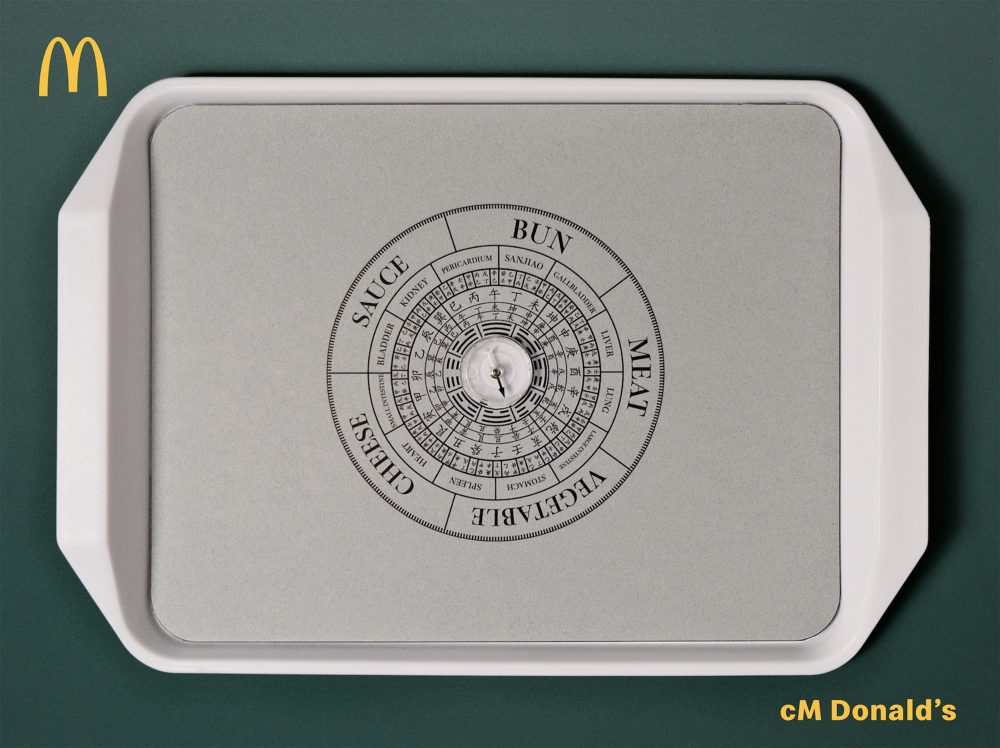
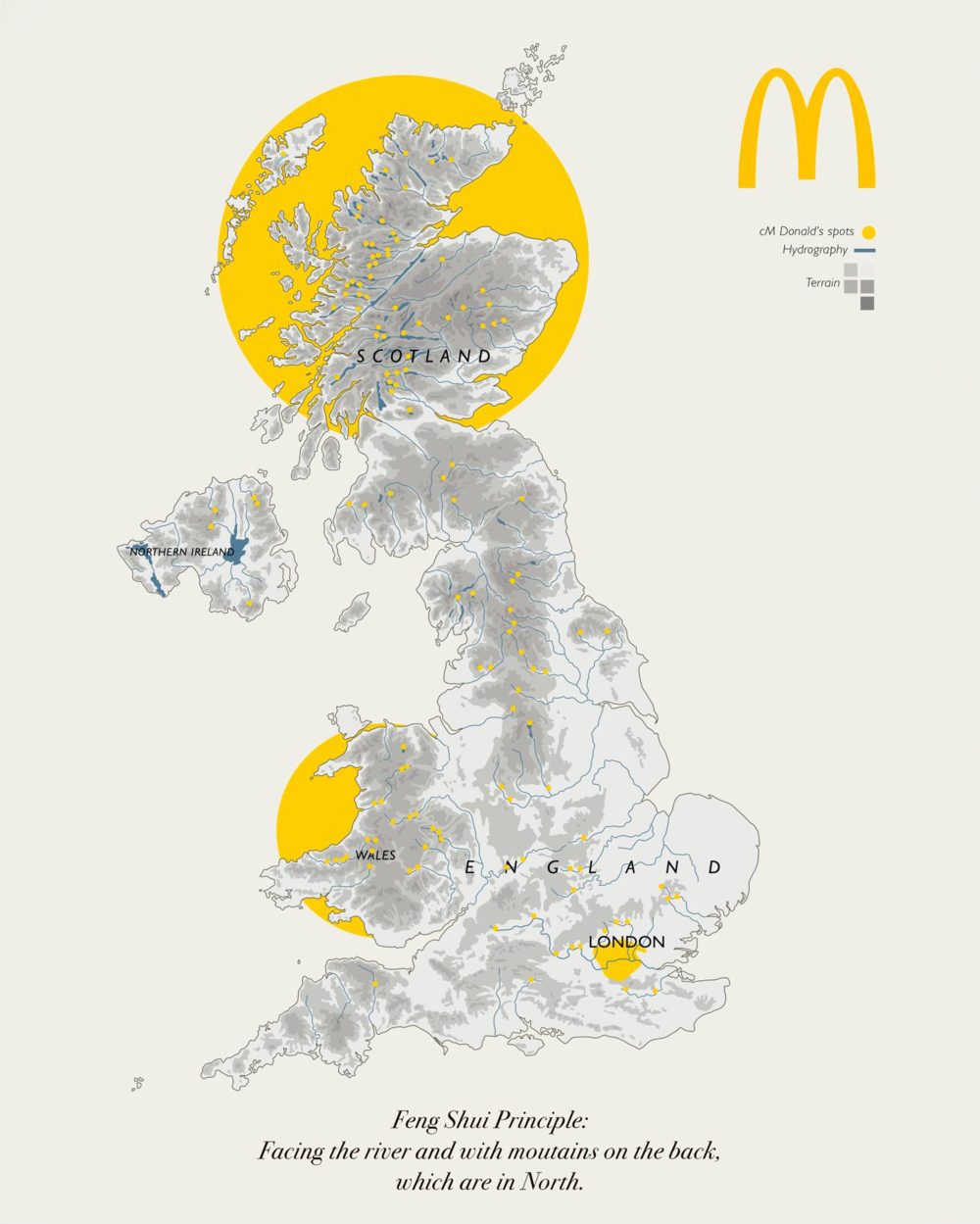
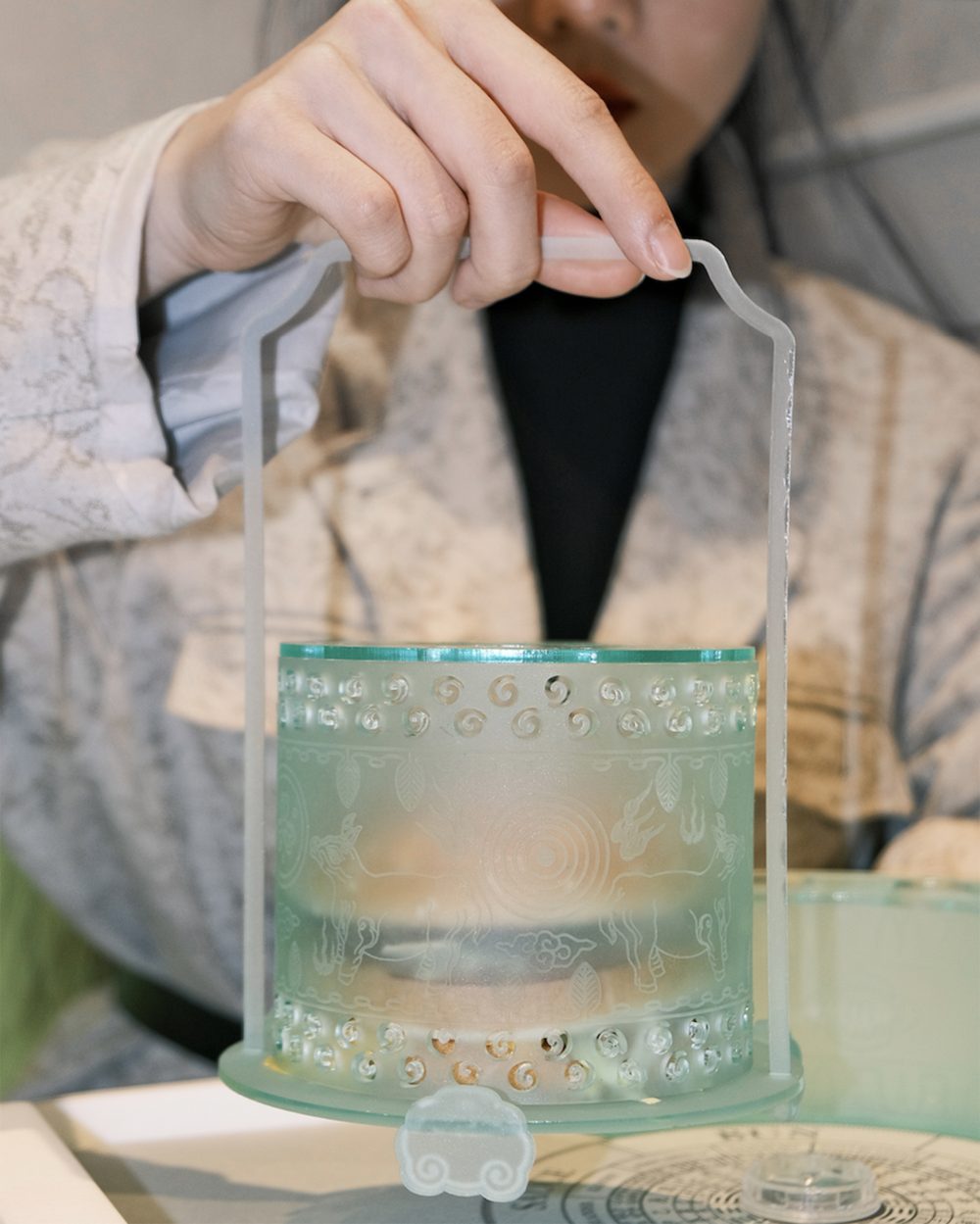
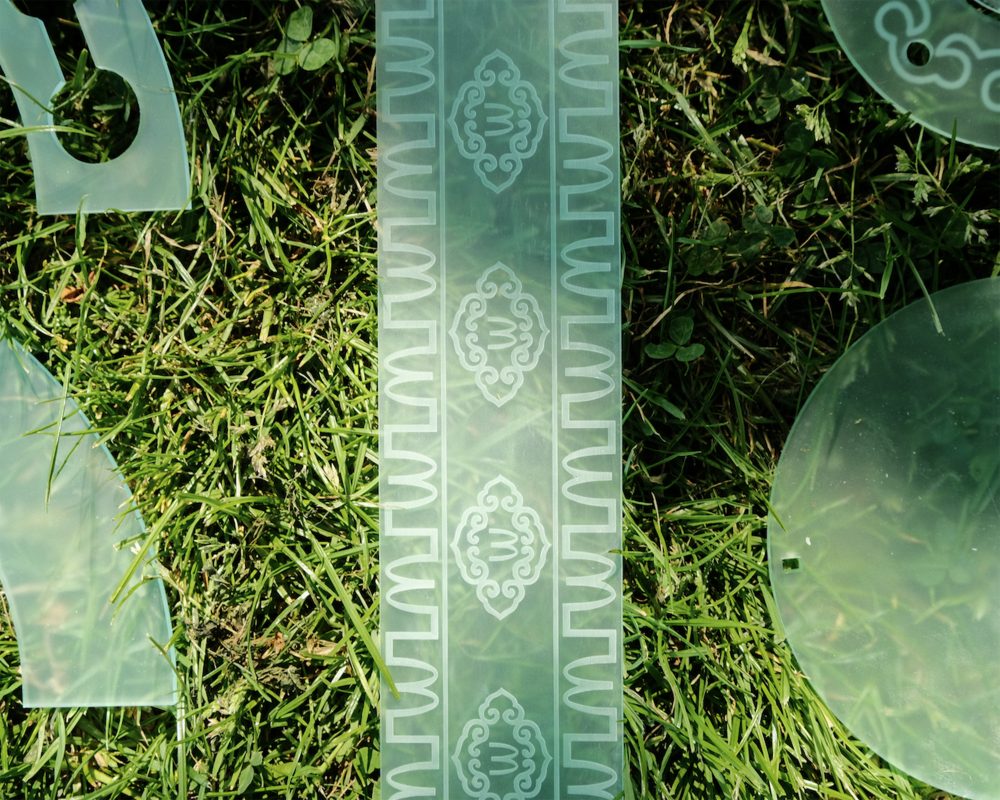
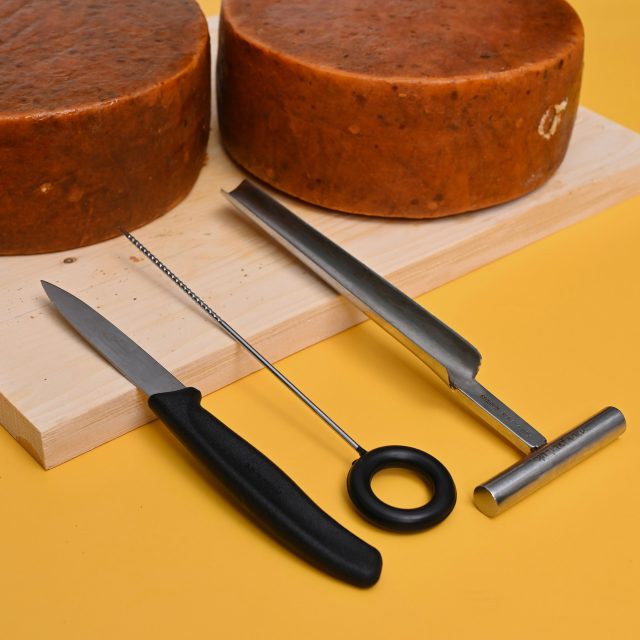
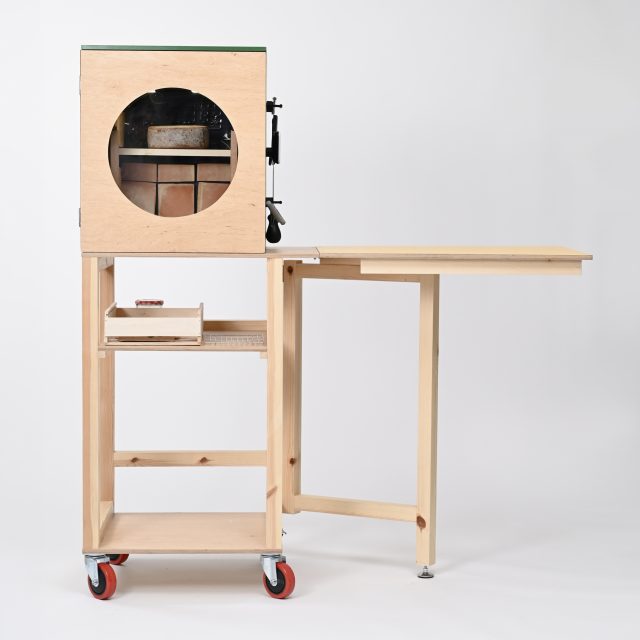
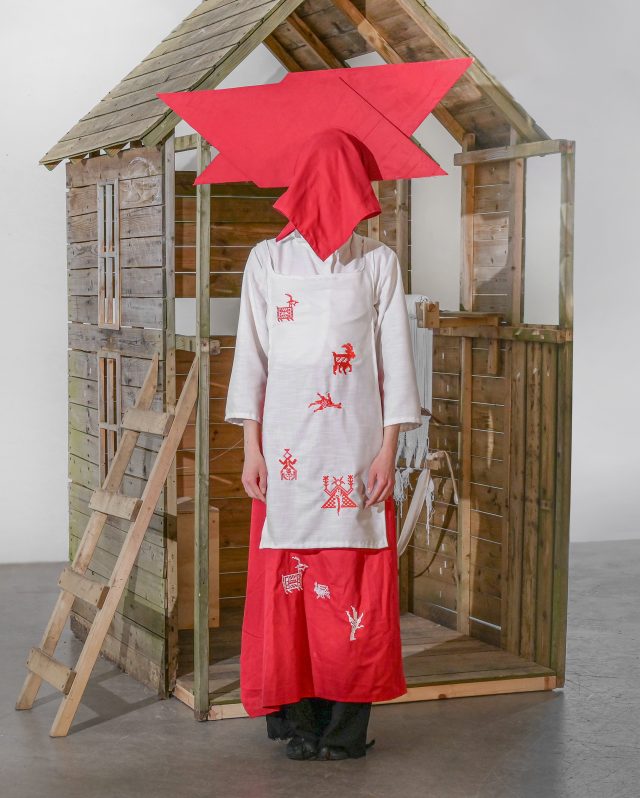
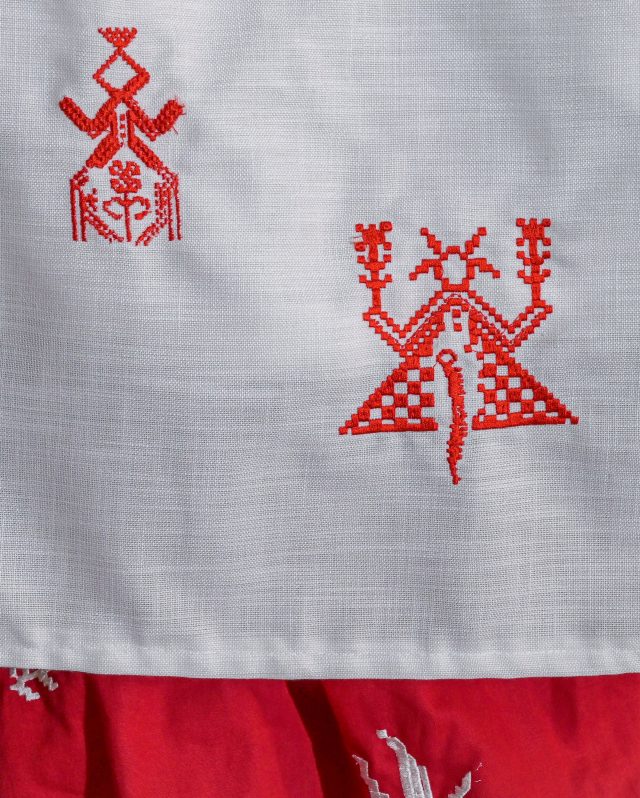
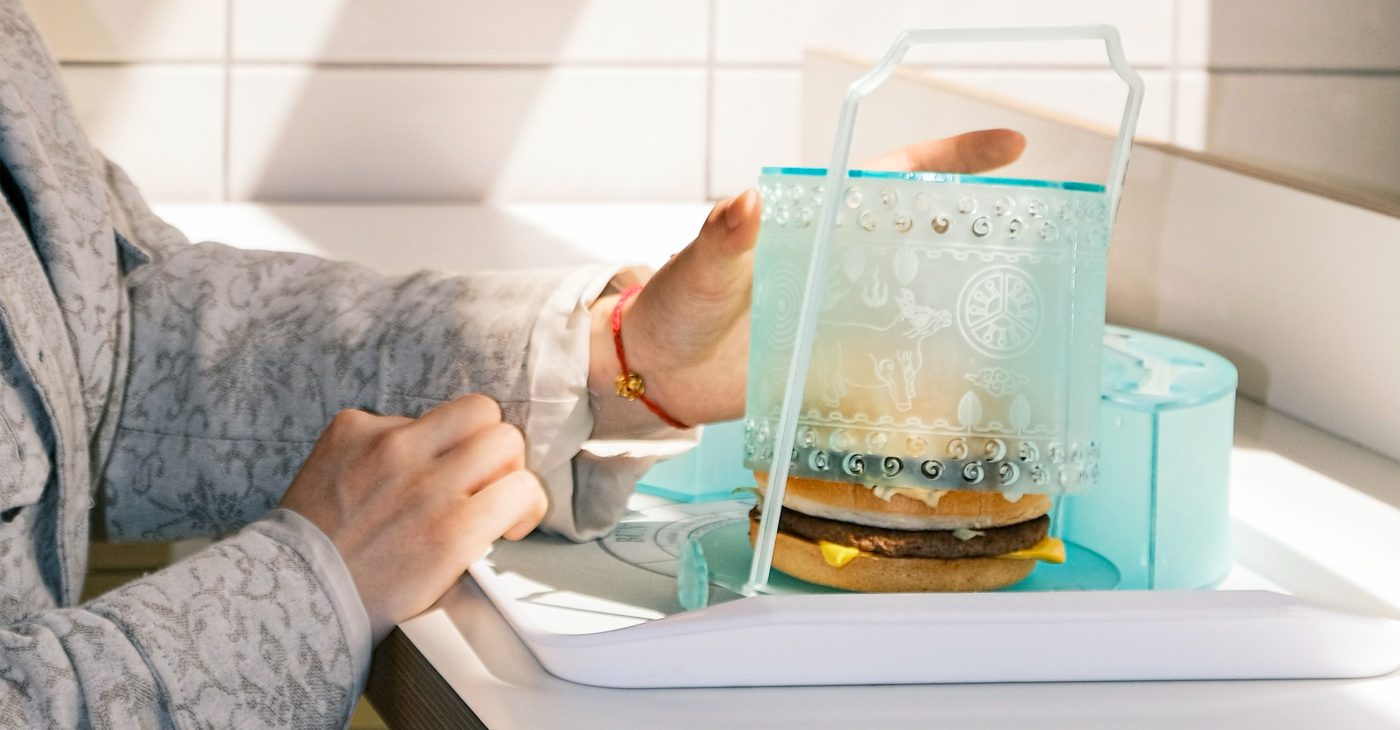
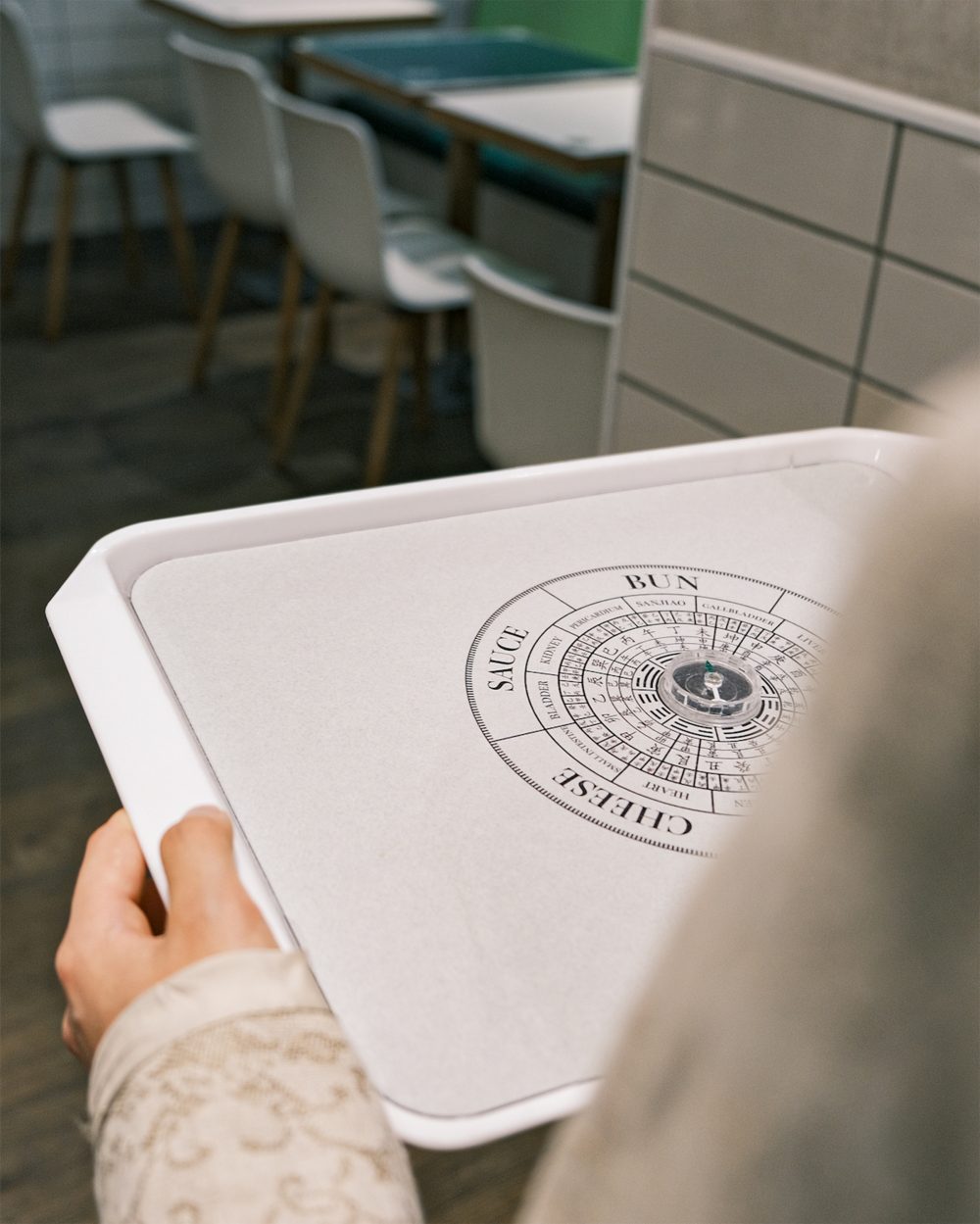
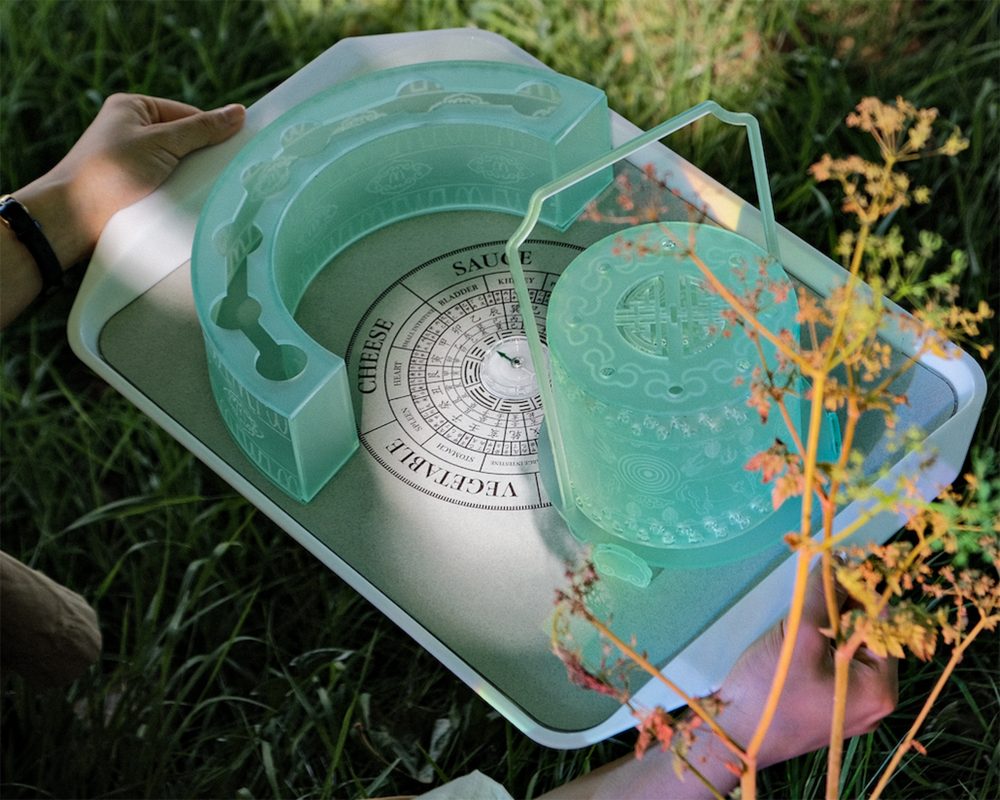
Finally I designed five cM Donald's artefacts – a series of maps, menus, burgers, trays and utensils – to offer tangible glimpses of this alternative McDonald’s.
cM Donald’s project uses a fictional historical background to free people from the current cultural conditions and invite them to look for unfamiliarities in the seemingly familiar. This counterfactual narrative opens up more historical possibilities for people and helps them recognise the weak legitimacy of the present cultural norms and envision an alternative world where non-western cultural notions and beliefs are fully adopted and transmitted. Designers can often fall into the trap of cultural appropriation when faced with users from different nations. Constructing a new narrative could work as a means to eliminate misconceptions about unfamiliar cultures, even my own culture, bridge cultural barriers and gaps and understand people better.
Working on the cM Donald’s project was also quite the self-education journey. As my professor Matt Ward, an experienced design educator, told me: “Education sometimes opens your eyes to injustices. …It can be difficult, but it’s also deeply valuable. …See the project as part of your growth as a person.” I used this project as a way to understand, interrogate and imagine national identities, values and possibilities.
A special thanks to Carolyn Kirschner and Stuart Bannocks for their help along this journey.